
Trump Signs Executive Orders to Accelerate Quantum Computing Development and Strengthen Cybersecurity

US President Donald Trump signed executive orders on Monday, directing the acceleration of high-performance quantum computer development for scientific research and the enhancement of government systems’ capacity to counter related cybersecurity threats, thereby solidifying America’s leadership in this critical technological competition.
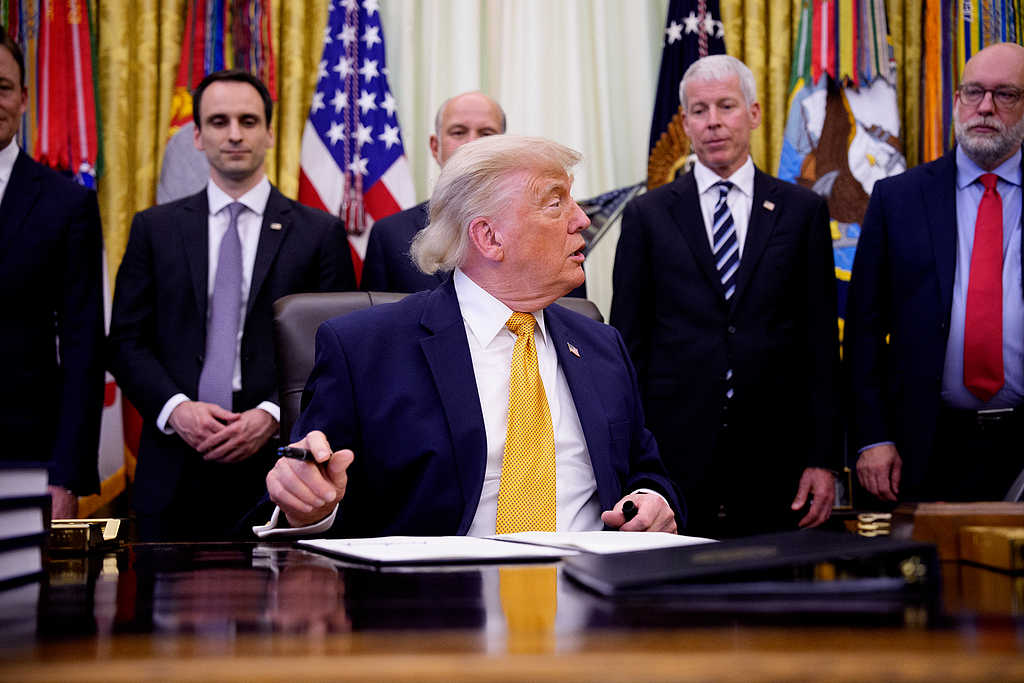
image description
Michael Kratsios, Director of the White House Office of Science and Technology Policy, stated during a pre-release press call, “We believe this goal can be achieved by 2028,” referring to the deployment of a quantum computer with significant scientific research value.


Subsequently, at the executive order signing ceremony, President Trump remarked, “We will make unprecedented investments in America’s quantum technology leadership,” adding that these measures would further expand the nation’s advantages in this field.


President Trump signed two executive orders. The first directs federal agencies, including the Department of Energy, to collaborate with the private sector and academia to deploy a quantum computer capable of scientific research by 2028.


The second aims to bolster the government’s defenses against quantum-driven cyberattacks, setting a goal to fully migrate critical government computing systems to “post-quantum cryptography” by 2030 or 2031.


Quantum computers leverage principles of quantum physics to process information, offering computational speeds far exceeding today’s most advanced supercomputers for certain complex problems. However, this technology also poses a risk of breaking current encryption mechanisms used to protect computer systems and data, raising concerns about potential large-scale cyberattacks in the future.


These executive orders underscore the Trump administration’s emphasis on maintaining U.S. leadership in the quantum race. Quantum technology is expected to drive major breakthroughs in fields such as artificial intelligence, materials science, and chemistry, while also introducing new cybersecurity challenges. The United States is thus seeking to bolster its defensive capabilities alongside technological advancement.


Last month, the U.S. Department of Commerce announced plans to invest $2 billion in nine quantum computing companies, including IBM’s newly established quantum computing project, through equity investments to support industry growth.
Additionally, the executive order proposes to strengthen international cooperation, with a focus on advancing intellectual property protection and the security of the quantum industry supply chain. Kratsios stated that this move aims to safeguard key technologies and industrial chains from external disruptions.


The relevant policy framework also requires federal agencies to formulate five-year deployment plans, accelerating the practical implementation of next-generation quantum technologies such as quantum sensors and quantum networks.


Currently, technology giants and a large number of startups are competing to develop larger and more powerful quantum systems, with the ultimate goal of delivering quantum computers that can consistently outperform traditional computers. Despite the recent surge in the stock prices of many quantum computing concept stocks, skeptics point out that the industry still faces numerous technical challenges before it can fulfill its long-term promises.


A senior White House official stated that the government aims to set a target of achieving a scientific-grade quantum computer by 2028, which could serve as a crucial stepping stone toward larger commercial quantum systems, laying the foundation for future quantum computers that perform practical tasks for enterprise clients.


Leave a Comment

Your email address will not be published. Required fields are marked *